Businesses you can start with $1000 in Zimbabwe

Businesses you can start with $1000 in Zimbabwe

Are you an aspiring entrepreneur in Zimbabwe, eager to start your own business but limited by capital? The good news is that you don’t need a massive investment to turn your business dreams into reality! While the idea of launching a successful venture with a tight budget might seem daunting, Zimbabwe’s dynamic economy actually offers a surprising array of opportunities for resourceful individuals.

This blog post is your ultimate guide to discovering profitable  businesses you can start with $1000 in  Zimbabwe. We’ll explore innovative ideas, practical tips, and key considerations to help you navigate the local market, maximize your limited funds, and lay the foundation for a thriving enterprise. Get ready to transform your ambition into a tangible business success story!

Disclaimer: The content within this guide is intended solely for general informational purposes. While we strive for accuracy, we encourage you to reach out directly to the brands or companies featured for any specific inquiries, up-to-date information, or personalized assistance.

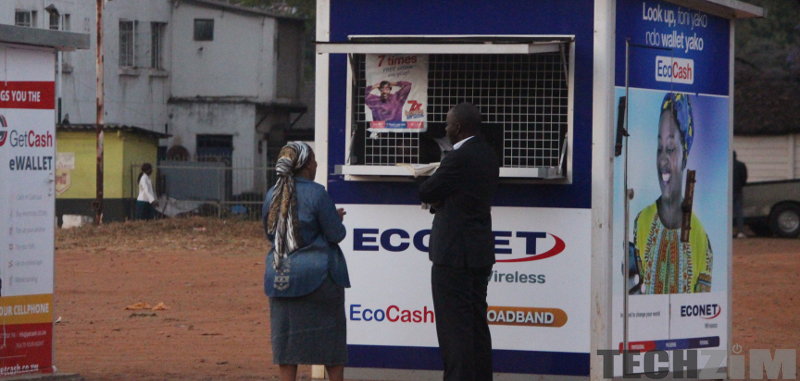
1.Ecocash/OneMoney/Innbucks agent

Ecocash Agent kiosk

Startup Cost: $500–$1,000 Potential Monthly Profit: $200–$600

With a mobile penetration rate of 96% (Potraz 2023), becoming an Ecocash or OneMoney agent is one of the most lucrative businesses in Zimbabwe. Almost every Zimbabwean with an Econet line is registered on Ecocash, making this a recession-proof venture. 

How to Start:

To begin, register as an agent with mobile money services like EcoCash, OneMoney, or Innbucks.  This allows you to faciliate registrations of  users on EcoCash, OneMoney, or Innbucks. These agents make money through facilitating cash in or out and they receive a commission. The commission rates differ with service provider to service provider.  For example, with Innbucks, for deposits the commission is 0.05% and for withdrawals it is 0.05%. OneMoney gives a commission rate of 1.5% and Ecocash gives a commission of 1.2%.  Here is a simple Math-

Assumptions:

-You do Ecocash transactions of at least $2000 per day = $24 per day by 30 days = $720 per month

-You do OneMoney transactions of at least $500 per day = $7.50 per day = $225 per month.

-You process Innbucks transactions of $500 per day which is $0.25 = $7.50 per month.

In total, you will get $952 in commissions.

 As a registered agent, it will make more sense if you register as an airtime dealer as well. Once you become a registered airtime dealer, you can purchase at discounted rates, typically offering an 8–12% profit margin. You can sell through WhatsApp groups, Facebook Marketplace, or set up a small roadside stall. Additionally, partnering with tuck shops can help expand your distribution network. If funds permit, you can start your own tuckshop using this guide. 

Pro Tip: Target high-traffic areas like Mbare bus terminus or Mbare Siyaso  markets to maximize sales.

An important point to note is that to be a registered Ecocash or Innbucks agent, you must have a registered company and a Tax Clearance certificate. 

Get in touch with us for all your Company Registration and Tax Clearance certificate. Call or WhatsApp us: +263716196475 | +263777069078
Remember to check our guides to become these agents. 

2. Home-Based Catering and Food Business

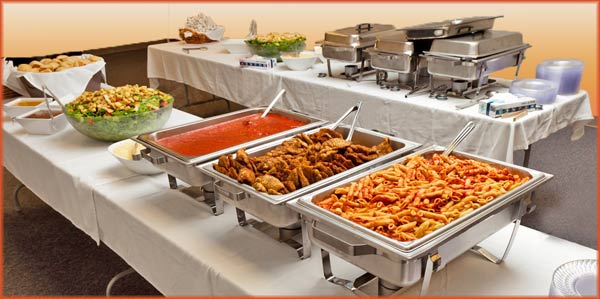
Local catering business


Startup Cost: $600–$900 Potential Monthly Profit: $300–$800

The demand for homemade food is increasing, particularly among students and working professionals. A home-based catering business allows you to start small and scale up as you build a loyal customer base.

Best-Selling Products:

Homemade peanut butter (supplied to supermarkets and local shops)

Baked goods like cakes, muffins, and scones (popular in offices and schools)

Pre-packaged meals for busy professionals

How to Start:

Obtain a food handling certificate from your local City Health Department.  Use WhatsApp  and Facebook to market your products. Start by selling to friends, family, and nearby businesses, then grow through word-of-mouth referrals.

Example: A home-based baker in Harare may approximately $500/month supplying muffins to local offices or high rise buildings.

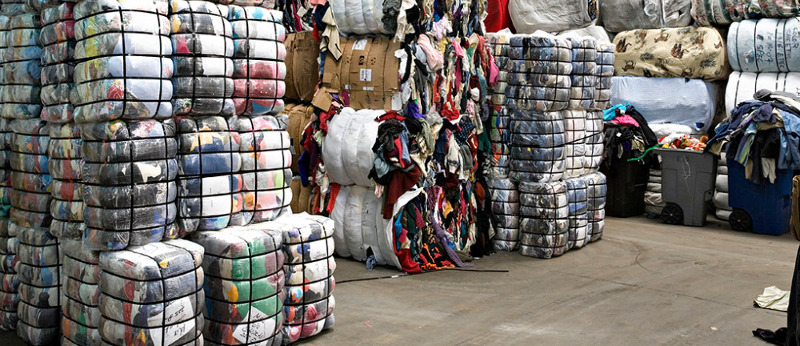
3. Second-hand Clothing (Mabhero) Business

Start-up Cost: $800–$1,000 Potential Monthly Profit: $400–$1,000

Zimbabwe imports over $50 million worth of second-hand clothing annually (ZIMSTAT). The demand for affordable, quality clothing remains high, especially in urban and peri-urban areas.                                                                                                                                                                                          How to Start:

You can source second-hand clothing bales from South Africa (Beitbridge) or local suppliers. Selling at flea markets like Mbare and Gulf Complex or through Facebook Marketplace can generate significant profits. Focus on school uniforms, workwear, and trendy fashion to maximize sales.

Pro Tip: Attend wholesale clothing auctions in Harare to get the best deals.

GetResponse AI Course Creator

4. Solar Products Reselling

Startup Cost: $700–$1,000 Potential Monthly Profit: $300–$700

With frequent power cuts in Zimbabwe, solar products are in high demand, particularly in rural and high-density suburbs.

Best-Selling Products:

Portable solar lights ($15–$30)

Solar phone chargers (popular in off-grid areas)

Small solar panels for TVs and radios

How to Start:

Import solar products from Alibaba or buy locally from suppliers like T&C Gas Accessories. Market through WhatsApp groups and local community networks to reach potential buyers. Better yet, hire a Digital Marketing Agency like City Cloud to help you build your online shop and manage your social media accounts. 

Profit Margin: 30–50% per unit.

The fastest way to grow your business will be offering your solar products to the civil servants on credit via SSB or to start participating in government tenders. To make this possible, you will need a registered company, Tax Clearance certificate among other crucial documents. 

For assistance with Company Registration and Tax Clearance Certificate, call or WhatsApp Us: +263716196475 | +263777069078

5. Freelance Digital Services

Startup Cost: $200–$500 (laptop + internet) Potential Monthly Profit: $300–$1,500

The digital economy is booming in Zimbabwe, with businesses increasingly relying on freelancers for services like graphic design, social media management, and content writing.

Top Services in Demand:

✔ Graphic Design (logos, flyers, business cards)

 ✔ Social Media Management (for SMEs) 

✔ Content Writing (blogs, product descriptions)

How to Start:

Learn skills through platforms like YouTube, Alison, or Udemy and join Zimbabwe Freelancers Group on Facebook for job opportunities.

Should you have multiple clients, see how you can accurately bill them by using billing tools like Zoho Books or Odoo. 

6. Poultry Farming (Roadrunner Chickens)

Startup Cost: $800–1,000 | Potential Monthly Profit: $400–900

Detailed Costs for 100-Day-Old Chicks:

Item

Cost (USD)

100 day-old chicks

$200–300

Feed (6 weeks)

150–200

Vaccines/Medications

$50

Brooder (heating/light)

$100

Total

$500–650

Suppliers:

Chicks: Irvine’s Zimbabwe 

Feed: National Foods 

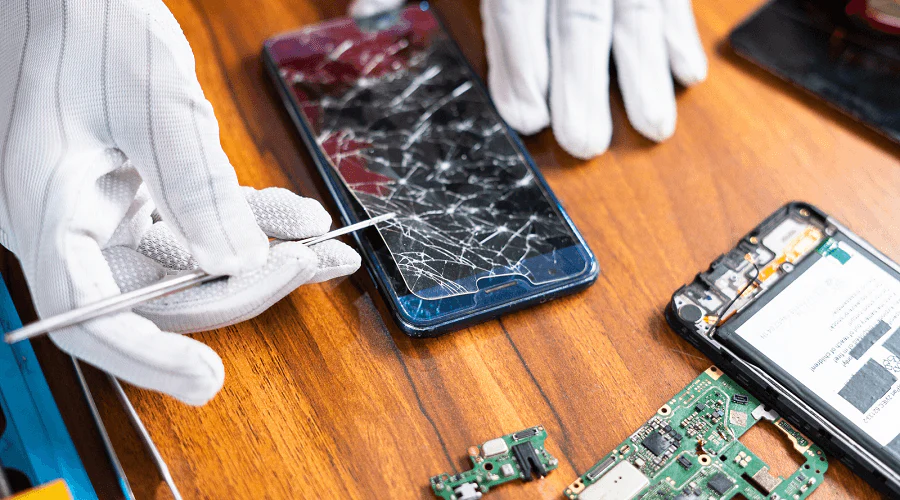
7. Phone and Laptop Repairs

Startup Cost: $900–$1,000 Potential Monthly Profit: $500–$1,200

With over 14 million mobile users in Zimbabwe (POTRAZ), phone repairs are always in demand.

How to Start:

Learn repair techniques through YouTube tutorials (e.g., “iPad Rehab“), purchase tools and spare parts from AliExpress or local suppliers such as Gulf Complex in Harare, and upsell accessories like phone cases and screen protectors.

8. Homemade Cleaning Products

Startup Cost: $600–$800 Potential Monthly Profit: $300–$700

Affordable cleaning products are always in demand, especially for households, schools, and clinics.

Best-Selling Products:

✔ Liquid soap (cost: $0.50, sells for $2)

✔ Disinfectants (high demand post-COVID)

How to Start:

Buy raw materials from duty-free shops and supply them to institutions and supermarkets.

Example: A Harare woman earns $600/month selling homemade detergent.

Turn leads into sales with free email marketing tools (en)

9.Blogging and Affiliate Marketing

Startup Cost: $100–$300 (domain + hosting) Potential Monthly Profit: $200–$5,000 (long-term)

Blogging and affiliate marketing offer long-term income potential, especially in lucrative niches like business ideas and product reviews.

How to Start:

  1. Purchase a domain name– Secure your domain through https://citycloud.host/billing/register.php . Check out this video guide for step-by-step instructions. 

Set up your website– Use WordPress for an easy, professional setup.

  1. Optimize with SEO– Grow traffic by targeting the right keywords and creating quality content.
  2. Monetize your blog– Earn through Google Ads and affiliate links from brands like Deriv, Alison Courses or Get Response.

10. Mobile Car Wash

Startup Cost: $800–$1,000 Potential Monthly Profit: $400–$900

A mobile car wash is an excellent venture for high-density suburbs where traditional car wash services are limited.

How to Start:

  1. Invest in quality equipment– Get pressure washers and eco-friendly cleaning solutions for efficient and safe cleaning. You can find hover vacuums and other car cleaning tools at a very cheap price on  Mutare Mart website. 
  2. Market your services– Promote through WhatsApp car owner groups for direct outreach.
  3. Offer competitive pricing– Create package deals to attract customers and build loyalty.

In conclusion, those are our top picks for the businesses you can start with less than a $1000 in Zimbabwe. Pick one that you are interested in, get started now and correct your mistakes as you go by. We will close this write up by quoting the words of David and Stephanie from their book Build a Business, Not a Job – 

“The final action step is to simply get started—now—today. The time will never be just right. Any delay just costs you momentum. So just jump in and get started. You don’t need a perfect start; you just need to get moving. You’ll figure out refinements and learn lessons along the way. But you need to get started now.”

Finkel, David; Harkness, Stephanie. Build a Business, Not a Job: Grow Your Business & Get Your Life Back (p. 195). (Function). Kindle Edition.

Maxwell Makumucha

Website: https://companyregzim.co.zw

Maxwell is a Google Certified digital marketer with 12+ years experience in the digital marketing space. He is also a skilled business consultant specializing in business formation and growth. He has worked with individuals and corporations—ranging from small and medium enterprises (SMEs) to large firms—both in Zimbabwe and internationally. Maxwell writes to empower SMEs by formalizing their businesses. He also shares his knowledge to guide investors on how to invest in Zimbabwe.